
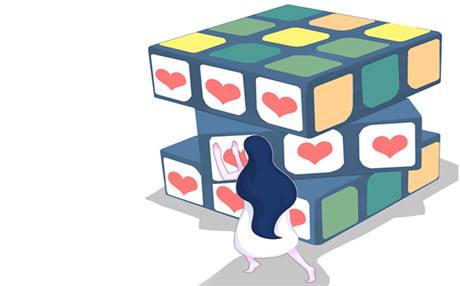
Do people’s personalities change with age?
Advertisement
From childhood to adulthood, you will go through a series of changes -- work, regretful hairstyles, on-again, relationships with break-ups and reconciliations. But what about your inner world? Does your personality change as you get older?

Character is a person’s unique feature of thoughts, feelings, and actions. People tend to think of character as stable. Psychologists disagree. “Character is a growth phenomenon. It’s not a constant thing that goes along for life and can’t be changed, “said Brent Roberts, a psychologist at the University of Illinois.
But that does not mean you wake up to a different person every day. In short, Roberts told Live Science, change can be nearly imperceptible. Longitudinal studies of personality suggest that our personalities are actually stable in the short term.
In a 2000 study published in the “Psychological Bulletin”, researchers analysed the results of 152 longitudinal personality studies in which participants ranged in age from childhood to their early 70s. All the studies measured trends in the big five personality traits. These features, including extroversion, pleasing characters, conscientiousness, openness to experience, and neuroticism, are all essential components of personality research. The researchers found that everyone’s level of personality features tended to be consistent over every 10 years, compared with other participants.
Advertisement
Brent Donnellan, a psychology professor at Michigan State University, says the consistent pattern starts from age 3, and maybe even earlier. When psychologists study children’s characters, they do not study it the same as the way they study adults. Instead, they look at temperament, which is how strongly a person responds to the outside world. We all came into the world with unique temperaments. Research suggests that our childhood temperaments-whether we are easy-going or irritable, for example, desiring for contact with strangers or more resisting-match those of adulthood. “There’s a big difference in behaviour between a shy 3-year-old and a shy 20-something, but both have an underlying core,” Donnellan told Live Science.
Early temper also seems to influence later life experiences. For example, a 1995 study published in the journal “Child Developmental Psychology” followed children from age 3 to age 18. They found that children who were shyer and more silent tended to grow up to be unhappy teenagers.
Advertisement
 1
1 1
1- Previous article
- The largest mammoth fossil has been discovered in Mexico
- Next article
- Is coffee good or bad for your health
Advertisement
OTHER NEWS

The Best Solution to Backache Is to Exercise More
BY Rose

What If There Were No Sharks?
BY Cheryl

The most common sports injuries
BY Ruby

Virtual Reality Therapy Can Help People Cope with Eating Disorders
BY Pamela

Russia announces intention to independently explore Venus
BY Lois

The never seen before Spirula squid, in its natural habitat
BY Susan
RECENT NEWS
-

Santander World Elite™ Mastercard®: The Perfect Travel Companion
-

The Buy Now Pay Later Space Is Getting More Competitive in Europe, As New Startups Sprout Up
-

Argentina Mourned Over Maradona’s Death for Three Days, Why a Football Player Could Own Such an Honor? (II)
-

Argentina Mourned Over Maradona’s Death for Three Days, Why a Football Player Could Own Such an Honor? (I)
-

007’s File Was Actually Hidden in Poland
-

A Small Town Named Fucking in Austria